
If you’re even slightly tapped into the world of Memphis rap, then you’ve probably heard about the long-standing beef between two of the city’s most influential & prominent producers—DJ Paul and DJ Squeeky. This wasn’t just a friendly rivalry over who had the hottest beats. Their conflict was deeply personal, rooted in loyalty, betrayal, and years of street-level tension that escalated into one of the most infamous producer feuds in Southern hip-hop history. Even today, remnants of this grudge still linger strong.
To understand how this beef began, we’ve got to rewind back to the early 1990s in Memphis, Tennessee. DJ Squeeky had already started dominating the underground with his infamous Volume #4, which featured the local classic “Lookin’ for the Chewin’.” By then, Squeeky had built a roster of legends like 8Ball & MJG, Kingpin Skinny Pimp, Homicyde, and R.A.N. He was the go-to producer in the city during his peak.
Meanwhile, a young DJ Paul was just starting to carve his own path. Still in his teens, Paul had already released several underground tapes and projects with his half-brother Lord Infamous & producer SMK, including material under the name The Serial Killaz. He was coming up fast, and it wouldn’t be long before he crossed paths with Squeeky.
The Turning Point: A Pistol-Whipping and a Diss Track

The true spark that lit the fuse reportedly came from an infamous incident involving Kingpin Skinny Pimp, who pistol-whipped DJ Squeeky at a club in early 1993. The conflict stemmed from Skinny allegedly wanting to drop his solo project through Squeeky’s camp and to collect his unpaid royalties —something Squeeky allegedly refused. But things escalated quickly.
As the story goes Skinny Pimp pistol whipped DJ Squeeky in the club with a Glock 21 chambered in .45ACP. The gun had apparently gone off, ricocheted and either hit or almost hit Skinny Pimp’s rap partner 211.
According to legend, the very next day, Homicyde took Skinny Pimp to DJ Paul’s mother’s house in Blackhaven in South Memphis. Ready to record new music and diss his former crew. Before this, DJ Zirk and Squeeky had at one point apparently sent both Skinny Pimp & Homicyde to DJ Paul’s place to confront him about samples, but instead of doing this, they took down his contact info since their relationship with Squeeky was already shaky. Once the club situation went down, Cyde took Skinny back over there to record new music with him. Skinny Pimp had recalled marveling at the amount of music equipment DJ Paul had at such a young age. His house was much nicer than many others in the neighborhood, as his father had his own pest-control business. On top of that Paul comes from a musical family who also supported his endeavors in the music industry,
Now with Skinny Pimp in his corner, DJ Paul knew he had to level up his producing game quickly. He notes the moment that Skinny Pimp came to his house to record as the major turning point in his career.
After a day of recording, the result was one of the most iconic Memphis diss tracks of all time called “Let’s Go To War”, released on DJ Paul Volume #11 in early 1993. The song featured Skinny Pimp and Homicyde—two artists who had recently defected from Squeeky’s camp. As a result, Squeeky and Zirk banned Skinny Pimp from local clubs and blacklisted him from performing around town.
The Tape Wars Begin

After that diss, the two sides launched into a full-blown tape war. DJ Zirk & Kilo G responded quickly with a track called “The Funeral” Paul began sampling and remixing songs originally recorded with Squeeky even more after this—most notably with the group R.A.N., who had appeared on both producers’ tapes. On DJ Paul Volume #14, the R.A.N. track “Quit Fuckin’ With the R.A.N.” was essentially a remix of their earlier version from DJ Squeeky’s Volume #5—a bold move that made it clear just how far the divide had grown. On that same tape R.A.N dissed the entirety of the 2 thick & DJ Squeeky crew on a diss track towards the end of the tape.
Then on DJ B.K. & DJ Squeeky’s Summer Mix Volume #1 from 1993. They relentlessly dissed DJ Paul on a side B track, calling him a “Handicapped Ho” since DJ Paul was famously born with Erb’s Palsy in his right hand.
Once DJ Zirk had learned that Juicy J & DJ Paul had begun collaborating in the midst of their beef. DJ Zirk took it upon himself to release the now-classic “Lock ’Em in the Trunk” off his 2 Thick tape in mid 1993—a certified Memphis classic and widely considered one of the best releases in the city’s underground history. This legendary diss track took shots at not only DJ Paul, but also Juicy J, and Skinny Pimp as well.
DJ Squeeky would then put out a different version of the same song on his Volume #8 in early 1994, ensuring both camps had their own version of the track for their respective sides. Famously on this version there is a skit before the song drops, where a DJ Paul impersonator goes up to Squeeky & Zirk trying to sell them the “95th” copy of his volume series using nothing but their own samples in it. Before Squeeky and Zirk chase him down and attempt to “Lock ‘Em In The Trunk”.
Tension only grew from there. With each tape, the two crews fired off subtle and not-so-subtle disses. Paul’s camp responded on tracks like “Beat ‘Em Down” by Lord Infamous. Mentioning what Squeeky had said about DJ Paul being “handicapped”.
“Thinking about that Summer Mix, getting pissed off what they said. Now I really wanna cut these bitches heads. They dead” – Lord Infamous on Beat ‘Em Down in early 1994.
Street-level altercations weren’t uncommon either—there are stories of the two camps brawling in Footlocker in Southland Mall after Kilo-G begun the fight by punching Homicyde in the face. They had even gotten into serious shootouts behind all of this.
Winners, Losers & Legacy
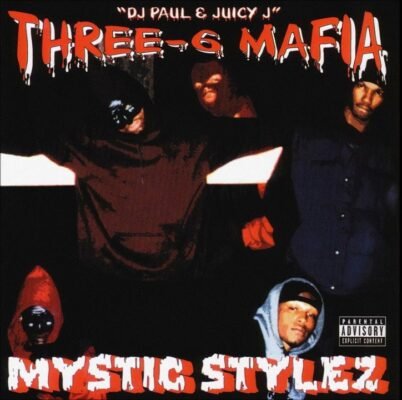
By 1995, DJ Paul and Juicy J had formed Three 6 Mafia, and their debut album Mystic Stylez marked a major turning point—not just for the crew, but for Memphis rap as a whole. With a distribution deal in hand and national buzz growing, Paul’s camp was leaving the underground behind. Squeeky and Zirk’s team, while still respected locally, started falling behind commercially.
Despite this, Squeeky never stopped working. While Three 6 Mafia went on to win an Oscar in 2006, DJ Squeeky never stopped working and made a mainstream breakthrough in 2008 by producing for Young Dolph’s first mixtape and songs. He continued working with Young Dolph up until his death in 2021. Producing not only his debut album, but also his biggest song ever “100 Shots” in 2017. Today the song has over 180 million views on youtube. Squeeky also produced for acts like 2 Chainz, Lil Wayne, Gucci Mane, Young Thug, Snoop Dogg and Key Glock—reclaiming part of the legacy he helped build from the beginning. And showing that he still has the talent to produce mainstream radio hits.
A Brief Truce?
 In 2010, fans were shocked when DJ Paul and DJ Zirk linked up to record a track called “Stick ‘Em Up” for Paul’s To Kill Again mixtape. Zirk even appeared in the video. On top of that they also performed together in Memphis the same year. Where DJ Paul brought DJ Zirk on stage and gave him his credit as a producer.
It looked like the beef might finally be squashed. But this was very short-lived. Since then, both Zirk and Squeeky have continued to throw shade at Paul—accusing him of co-opting their sound and taking credit for their innovations.
The Lawsuit Era

The beef made headlines again in 2020, when DJ Zirk, Lil Ced, MC Mack, Skinny Pimp, and others filed a class-action lawsuit against DJ Paul and Juicy J for unpaid royalties. The suit centered around the use of early material from artists who were part of their early camp but never saw compensation as Three 6 Mafia exploded in popularity.
DJ Zirk eventually announced victory in the lawsuit on Instagram in 2021, which legally recognized him as a gold/platinum-level producer. While it didn’t rewrite history, it brought long-overdue recognition to a key figure in Memphis rap history.
Final Thoughts
The feud between DJ Paul and DJ Squeeky wasn’t just personal—it was foundational to the sound of Memphis rap as we know it. Whether you side with Juicy and Paul or ride with Squeeky and Zirk, there’s no denying that their competition helped push both the genre and music forward. Both producers are legends in their own right. And while their relationship may never fully heal, the music—and the drama—will live on forever.